


Iron and zinc are among the essential micronutrients needed for growth and development, with deficiencies leading to anemia, a weak immune system, and stunting.
DA-PhilRice, in partnership with the International Rice Research Institute (IRRI), is leading the work on High Iron and Zinc Rice (HIZR) in the Philippines to develop and test HIZR to complement existing interventions to improve the iron and zinc status of Filipinos.
HIZR contains significantly higher levels of iron and zinc available in the grain, developed through genetic engineering by enhancing a rice gene and adding an apple gene to the rice genome. HIZR is intended to complement existing nutrition interventions for anemia and stunting, which is a severe public health problem affecting children under 5.
Despite low levels of nutrients available in ordinary rice, it continues to be the top source of iron among Filipinos because of the large quantities of rice consumed daily. As such, improving the iron and zinc stores of rice has the potential to significantly improve the nutritional status of Filipinos.
Status of the HIZR Project
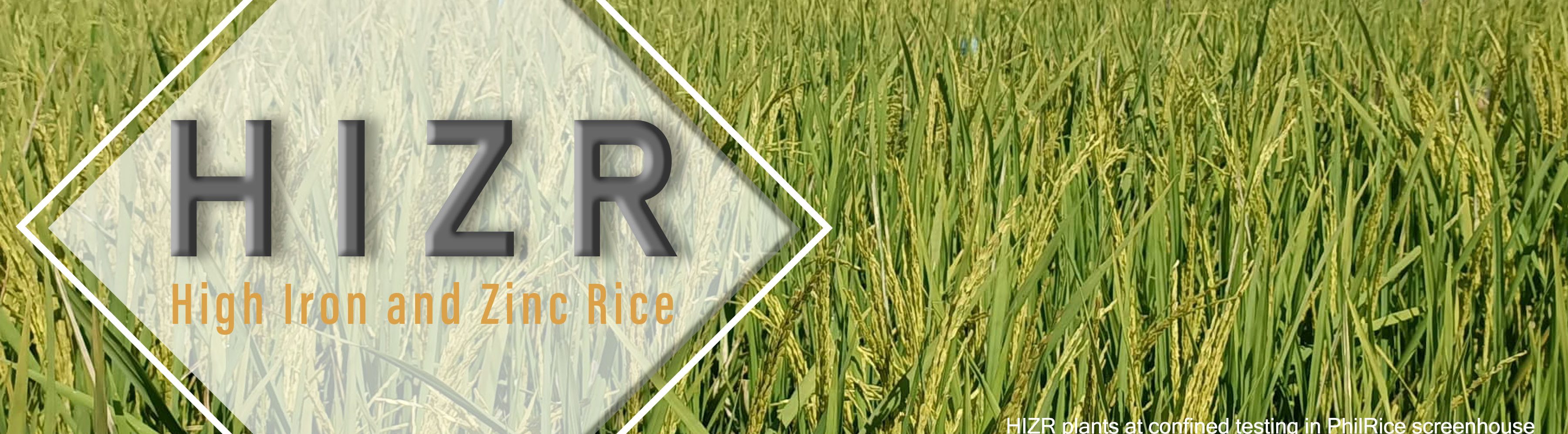
HIZR has undergone confined testing for two events, IRS-1030-031 and IRS-1030-039 on June 20, 2020. Results from these tests demonstrate the high iron and zinc content of the crop as well as its desirable agronomic performance. The successful confined tests advance the project towards the next step of the regulatory process.
On 30 May 2022, DA-PhilRice submitted an application to the DA-Bureau of Plant Industry (DA-BPI) for the conduct of the HIZR field trial for two separate events: IRS-1030-031 and IRS-1030-039. The proposed field trial is intended to generate environmental data for assessment and compositional analysis data for succeeding regulatory applications; and harvest seeds for future field trials, as needed.
After completing all the necessary biosafety regulatory approvals, the goal is to stack Golden Rice and HIZR traits to develop a “3-in-1” biofortified rice variety with vitamin A, iron and zinc. By doing so, our target communities with multiple micronutrient deficiencies will receive the added nutritional benefit of three essential micronutrients in just one type of rice.
For more information on the HIZR project, please visit our FAQ page.